
Thread Length, Curvature, and Constitutional Continuity
One of the most common errors in interpreting any complex system is assuming that a short segment reveals the whole path.
It rarely does.
A thread viewed across a few centimeters may appear straight, curved, reversing, or even tangled. Extend the visible portion, however, and the same thread may reveal itself as part of a spiral, a braid, a knot, a repair, or a larger weave whose governing direction was previously invisible.
Length changes understanding.
A moment can disclose state.Continuity discloses relation.
LOOM follows what remains, changes, departs, returns, and still bears relation to where it began.
A braided thread cannot be understood by examining only one strand.
LOOM therefore distinguishes between local curvature and constitutional direction.
The first belongs to observation.
The second belongs to continuity.
Composition Matters
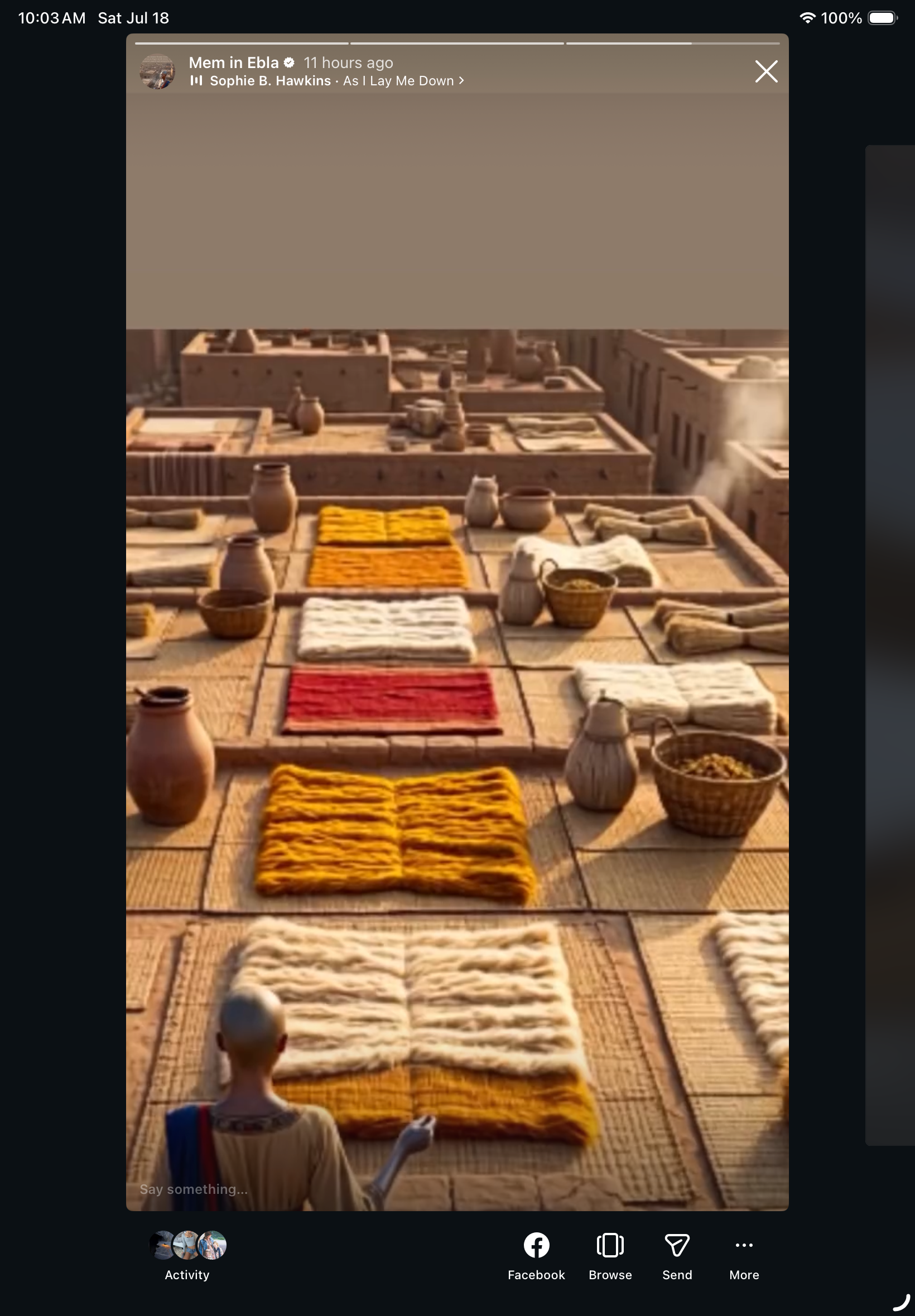
Threads differ not only in length but in composition.
Some are tightly spun.
Some remain loose and organic.
Some carry pigment.
Some carry memory.
Some carry authority.
Some exist primarily to bind.
The composition of the thread influences how curvature should be interpreted.
A rigid metal wire and a linen fiber cannot be evaluated using identical assumptions.
Likewise, constitutional systems composed of law, language, commerce, memory, or stewardship exhibit different forms of continuity despite sharing the same underlying weave.
GNOMON and LOOM are complementary, with their foundations at emsgnomon.com and encodedmaterialsystems.com.
GNOMON asks: What is the identity of this artifact?
It then measures delta between states based on previous record: fidelity measurement against established reference.
LOOM asks a different question: What larger continuity does this belong to?
It evaluates provenance.
It follows inheritance.
It reveals constitutional curvature.
GNOMON determines whether an object faithfully represents itself.
LOOM determines whether the observer has followed enough of the thread to understand what they are actually seeing.
One protects identity.
The other protects continuity.
Neither replaces the other.